Home / AI Enablement / Training and workshops
AI training and workshops in Kansas City
A workshop that cannot survive Monday is a performance.
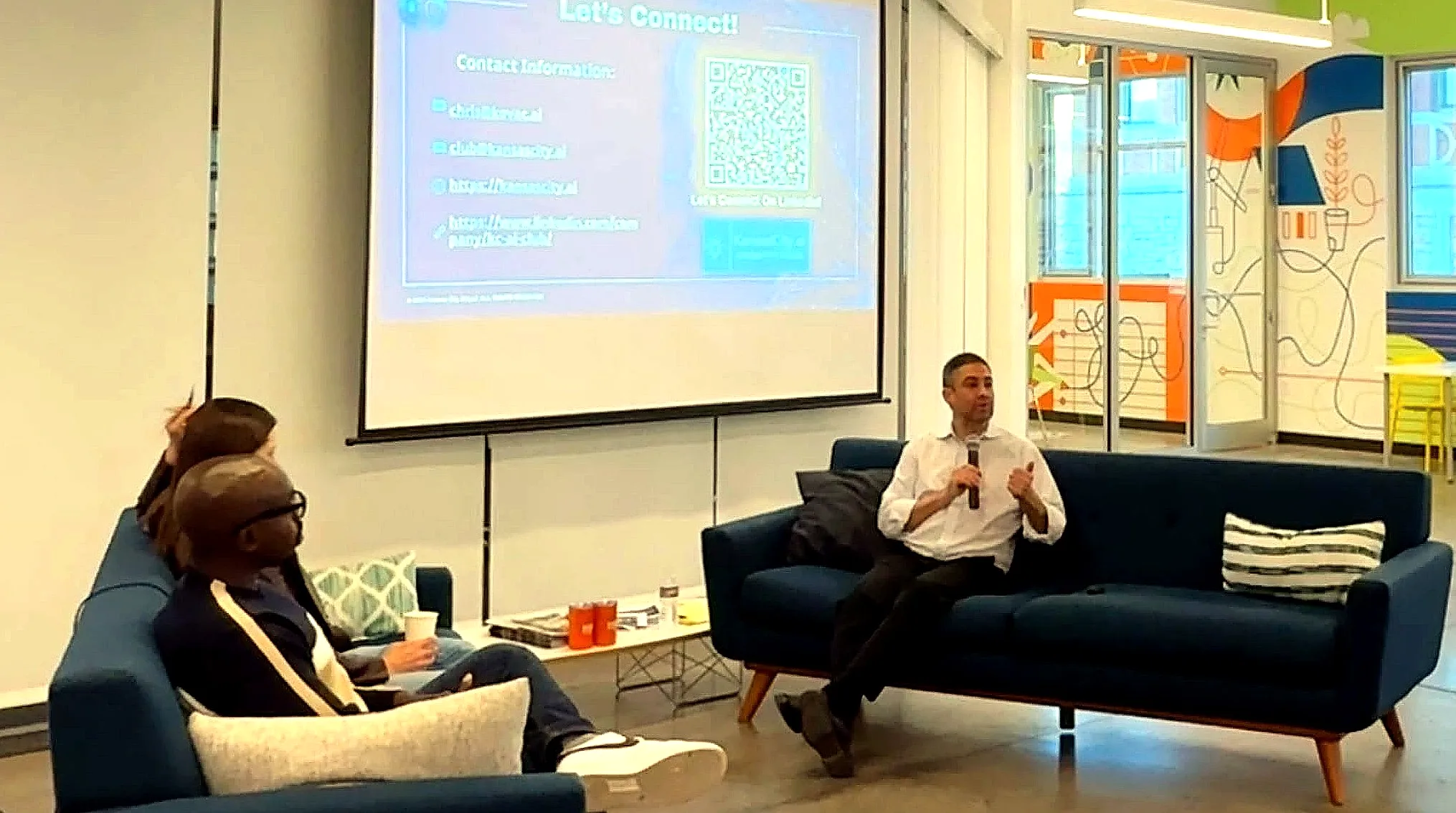
kovac.ai trains executives and teams to use AI in their daily work. Every session is built for the audience in the room, with hands-on practice and use cases people can start using right away. We offer hands-on workshops for teams and training for leadership, in person or virtually. We work with organizations throughout the Kansas City metro and with clients nationally.
Why AI training matters
AI is hard, and most people are learning it on their own, between meetings. They pick up tips from videos and newsletters, try a tool a few times and get mixed results. Some decide AI is overhyped; others keep using it without knowing what is safe to share. Nobody planned for people to learn this way, but it is where most organizations have ended up. Good training replaces the guesswork with shared skills, shared guidelines and use cases that fit the job.
Two kinds of training
People need to understand two things about AI. The first is what it can do for the business: which problems it can help solve and what it takes to put it to work. The second is how to use the tools well, from writing a good prompt to knowing which tool fits which task. Our training covers both, in the proportion the audience needs.
Workshops for teams
- Workshops are hands-on, with laptops open. Each one starts with a current overview of AI and the major tools, focused on what each tool is good at rather than on technical model comparisons. Most of the time goes to prompting, from the basics through intermediate and advanced techniques, including how to set up instructions and reusable skills. The group then applies those techniques to practical use cases it can put to work that day. Every use case we teach has been tested by us first.
- Use cases are chosen for the audience. Common examples include updating standard operating procedures and HR policies. Others include drafting marketing content, analyzing data, building business projections, doing research and using AI as a sounding board for business decisions.
Training for executives and leadership teams
Executives do not need to become AI practitioners, but they do need to be AI fluent. Leadership training covers what AI can and cannot do, where it creates risk, how to judge a realistic use case and what to ask vendors and internal teams. It is built for business decisions and delivered in business language. Leadership training can also be the first step in a broader AI Enablement engagement.
Coaching for executives
Some leaders need support that continues after a session ends. Executive coaching gives them ongoing time to build AI fluency and work through decisions as they come up. Executive Coaching
Governance and security come first
Our training covers governance and security before it gets to use cases. People need to know what is safe to share with an AI tool, which tools are approved and when output needs a second look. Starting there lets them use AI with confidence instead of hesitation. We also talk openly about the downsides of AI, including errors in its output and its effect on jobs, because a human-first approach means being honest about both sides. Organizations without AI guidelines can put them in place through AI governance consulting.
Built for the audience in the room
No two sessions are the same. Before any training, we meet with the client, send a short pre-session survey and hold a discovery meeting to learn about the audience, its industry and its goals. We build an outline and send it for approval. We then build the session materials, which the client usually reviews before the session as well. AI changes quickly, so every session is built fresh, and if there is a topic the organization wants covered, we cover it.
What participants take with them
- A best practice guide. Every session includes one, and it can be tailored to the industry.
- A prompt worksheet. A quick reference for the prompting techniques covered, included with many sessions.
- A platform guide. A list of major AI platforms matched to the tasks each one handles best.
- Use cases ready to use. Each one is practical and was tested before it was taught.
Taught by someone who started as a skeptic
Chris Kovac founded kovac.ai after 30 years in marketing and technology, and he has spoken to business audiences for more than 20 years. He was skeptical of AI at first and tested it inside a business he ran before teaching anyone else. That shapes how he trains. Sessions are energetic and practical, questions are welcome and he says so when he does not know an answer. Participants leave with something that works in the real world, not a lecture on theory.
Formats
Training is available in person or virtually. Sessions run from about an hour to several hours, for a single department, a full leadership team or a larger group. We also deliver training for professional associations, conferences and corporate meetings. Fees depend on format, length and customization and are provided on request.
Based in Kansas City
kovac.ai is based in Kansas City and trains organizations across the metro, including Overland Park, Olathe, Lenexa, Lee's Summit and the Northland. We also train teams nationally, on site or virtually.
Frequently asked questions
What should AI training for employees cover?
AI training for employees should cover the organization's AI guidelines, what the approved tools do well, how to write effective prompts and practical use cases tied to their jobs. It should also cover what information is safe to share and when AI output needs review. Hands-on practice matters more than slides.
What is the difference between an AI workshop and an AI keynote?
An AI keynote gives an audience a broad view of AI and what it means for them; it is meant to inspire. An AI workshop is hands-on and meant to inform. Participants work on their own laptops, practice prompting and apply AI to use cases from their jobs.
What is prompt engineering training?
Prompt engineering training teaches people how to write instructions that get accurate, useful results from AI tools. At kovac.ai it runs from basic prompts through intermediate and advanced techniques, including reusable instructions and skills, and it is practiced on real work tasks.
Do employees need technical skills for AI training?
No. kovac.ai training is built for business users and taught in plain language. Technical teams can go deeper, but no coding or technical background is required to take part.
Should AI training include governance and security?
Yes. Employees should know what is safe to share with AI tools, which tools are approved and when output needs review before they start using AI for work. kovac.ai covers governance and security before moving into use cases.
Can AI training be customized for a specific industry?
Yes. Every kovac.ai session is built for the audience, with use cases and materials tailored to the industry. The outline and materials are reviewed with the client before the session.
Is AI training available virtually?
Yes. kovac.ai delivers AI training and workshops both in person and virtually.
Does kovac.ai offer AI training outside Kansas City?
Yes. kovac.ai is based in Kansas City and trains organizations nationally, on site or virtually.
How much does AI training cost?
The cost of AI training depends on the format, length, group size and level of customization. kovac.ai provides fees on request after an initial conversation about the audience and goals.
Start with a conversation
The first step is a conversation about the audience, its goals and how AI is being used today. Fill out the form below, and we will follow up to find a time.